Tampa
Downtown and Water Street, Harbour Island and Bayshore Boulevard, at the head of Tampa Bay: where new buildings rise, how Florida law shapes every sale, and what the bay asks of a new building.
The market in brief
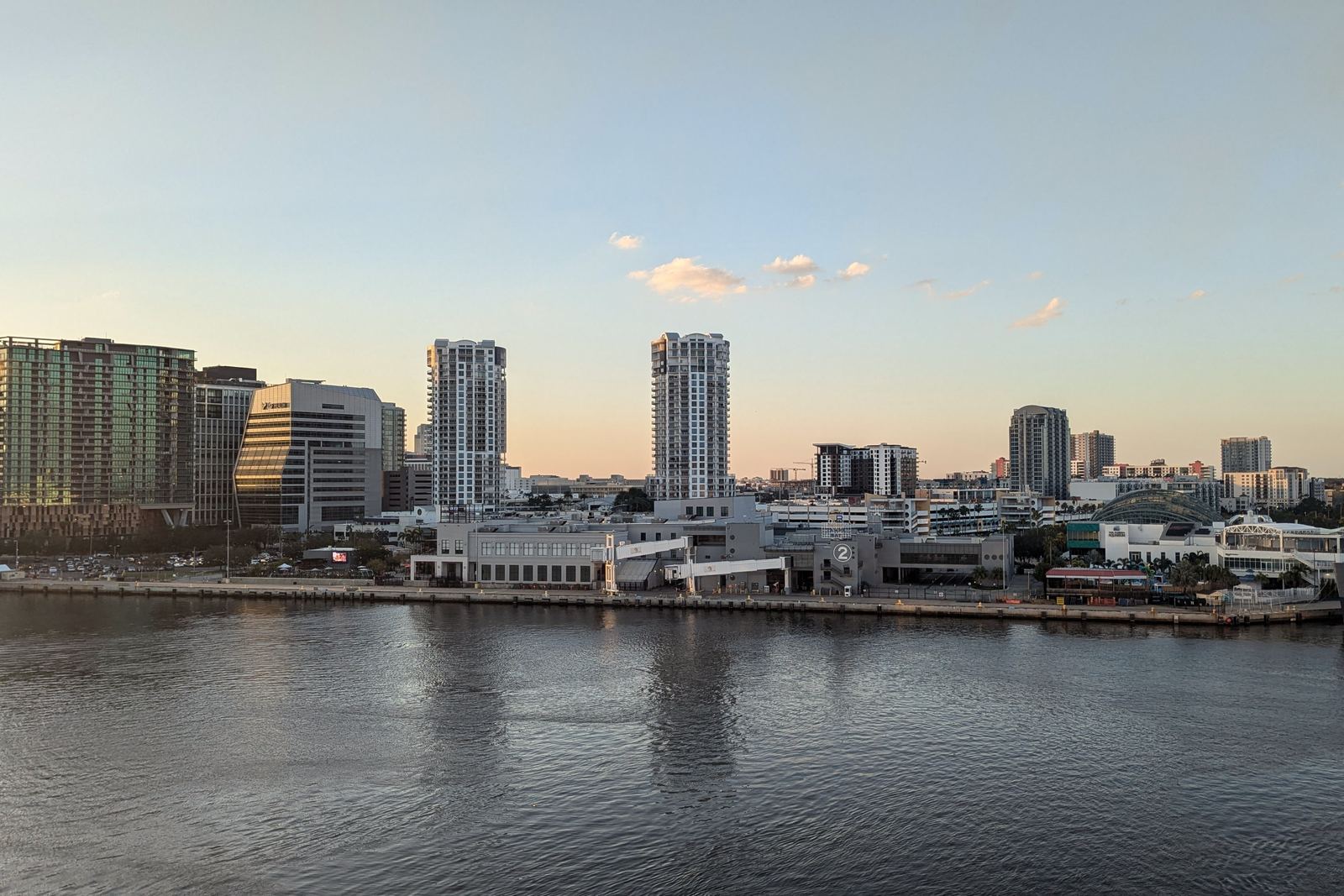
Tampa comes later for us, after Los Angeles and Dallas, as our first market on Florida’s Gulf coast. Its new residential towers gather downtown, where the Water Street district has risen beside the Channel District on land that was largely parking, and along the water at Harbour Island and Bayshore Boulevard. Its buyers include the region’s executives and business owners, families moving from the Northeast and the Midwest, and Florida buyers who want a city home on the water for less than the same view costs in Miami.
- Area
- Downtown and Water Street, the Channel District, Harbour Island, Bayshore Boulevard and Hyde Park, and Westshore
- Status
- Later, after Los Angeles and Dallas
- Before any sale
- The developer’s documents filed with the state before purchase contracts are offered
- Deposits
- The first 10 percent in escrow until closing; above that, available for construction if the contract allows
- Right to cancel
- 15 days from signing and receiving the documents
We will add market figures here when we open Tampa, drawn from the same kinds of sources as our other market pages. Our South Florida page covers the rules that apply across Florida, and Naples follows on the same coast.
Where new buildings rise
Downtown and Water Street
The business district along the Hillsborough River and the new Water Street district east of it, where offices, hotels and residential towers share streets laid out for walking, joined to the river by the Riverwalk.
The Channel District and Harbour Island
Warehouses and newer towers beside the port, and across a short bridge, Harbour Island, a residential island of condominiums and townhouses facing downtown.
Bayshore Boulevard and Hyde Park
A boulevard that follows the bay for miles beside a continuous waterfront walk, with Hyde Park’s streets behind it. Condominiums along the boulevard look straight over the water.
Westshore
The office district near the airport, with residences rising by the marinas on Old Tampa Bay.
How a purchase works here
A new Tampa condominium usually sells in two steps: a refundable reservation that holds a unit, then a purchase contract once the developer’s documents are filed. Under section 718.503 (opens in a new tab), the contract starts a 15-day window to cancel without penalty, and a deposit schedule that often reaches 30 to 50 percent of the price before completion. Under section 718.202 (opens in a new tab), the first 10 percent stays in escrow until closing; anything above it may fund construction if the contract allows.
Our buyer guides cover each step: buying pre-construction in Florida and buying new construction in Florida, from warranties and reserves to closing costs and the homestead exemption.
What a developer works with here
- Filing before contracts. Under section 718.502 (opens in a new tab), a developer may not offer purchase contracts until its documents are filed with the state. Reservations can come earlier, refundable on request.
- Deposits that can build. Deposits above 10 percent may fund construction where the contract allows, which changes how much equity and debt a project needs. That is not possible in New York.
- Storms and the bay. Two hurricanes, Helene and Milton, brought surge and wind to Tampa Bay within two weeks of each other in 2024. Buyers ask about elevation, flood zone and insurance first. Show the building’s design for storms plainly in the offering.
- Reserves from the first budget. A developer-controlled association cannot waive or cut reserves, and buildings three stories or taller need a structural integrity reserve study. Monthly fees are part of the price buyers compare.
- Buyers from New York. Marketing a Florida offering to New York residents brings New York’s filing rules with it, as our New York page explains.
Costs and rules at a glance
- Deed stamp tax
- 70 cents per $100 of the price. A seller’s cost by custom, often passed to the buyer in developer contracts
- State income tax
- None
- Right to cancel
- 15 days from signing and receiving the documents, renewed by any amendment that materially changes the offering against the buyer
- Deposits
- First 10 percent in escrow until closing; above that, available for construction if the contract allows
- Warranty
- Three years on the unit from completion of the building; roof, structure and building systems up to five years
- Homestead
- Up to $50,000 off the assessed value of a primary residence for most property taxes, $25,000 for school taxes, with yearly increases held to 3 percent at most, for owners in residence on January 1
A launch, step by step
- Before filing. Pricing, unit mix, plans and amenities are set against the buildings a buyer will compare. Reservations may be taken once the escrow agreement is approved, refundable on request.
- Filing. The developer files its documents with the state. Purchase contracts follow, each with its 15-day window to cancel.
- Construction. Deposits arrive on schedule; the first 10 percent stays in escrow. Weekly reporting shows whether pace meets the lender’s threshold.
- Completion. Walk-throughs, the certificate of occupancy and closings, one residence at a time.
- Turnover. The developer hands the association to the owners, with an inspection report for each building three stories or taller.
What we will do here
When we open Tampa, we will work as we do in our other markets: advice before launch on pricing, unit mix, plans and amenities, the buyer profile and the launch strategy, then a sales report every Monday against the plan. If you are planning a building downtown, on Water Street or along Bayshore, we are glad to talk it through now.
Sources
- Florida Statutes, section 718.502 (opens in a new tab), section 718.503 (opens in a new tab) and section 718.202 (opens in a new tab).
- National Hurricane Center, tropical cyclone reports on Hurricane Helene (PDF, opens in a new tab) and Hurricane Milton (PDF, opens in a new tab).
General information only, not legal, tax or investment advice. Florida law, local rules and tax rates change, and every project is different. Review any purchase or project with a Florida real estate attorney.